Lesson Notes: This lesson focuses on where marketing happens, how brands choose channels, and how marketing operations work, not on communication theory (already covered).
What Makes Marketing Channels Different from Communication Platforms
Your earlier lessons focused on fashion communication, which explains:
-
What a brand says
-
How messages travel
-
Which platforms carry the message (Instagram, magazines, websites)
Marketing channels, however, focus on the business side:
-
How customers reach the brand
-
Where products are sold
-
How revenue is generated
-
Which pathways lead to conversion
This lesson explains the operational and commercial side of fashion.
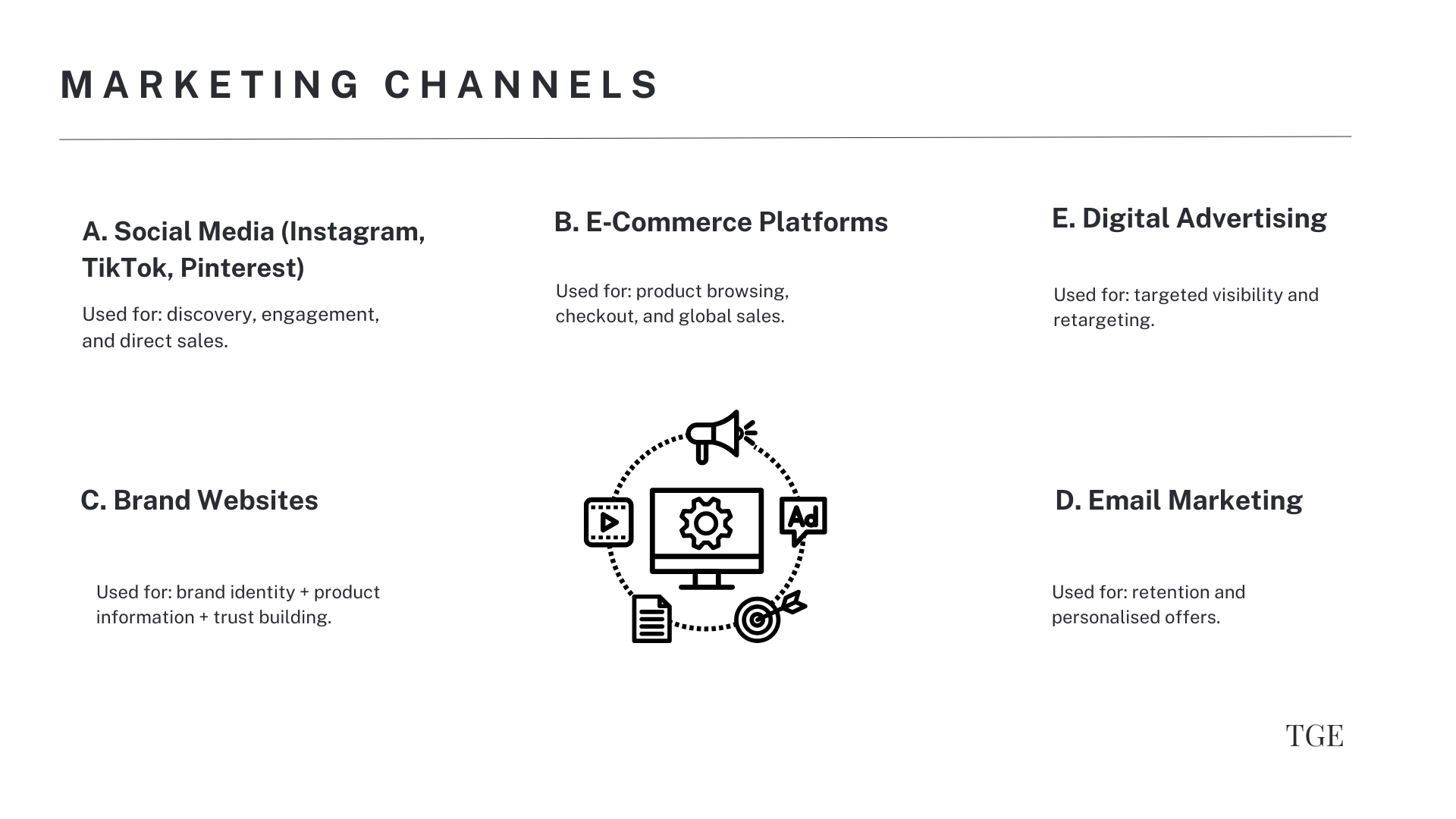
1. Online Channels
-
Instant communication: Brands can respond to trends within hours.
-
Data-driven insights: Analytics show what customers like, click, and buy.
-
Global reach: A small brand in Milan can sell to customers in Tokyo.
-
Personalisation: Ads and emails adapt to each customer’s behaviour.
-
Fast trend response: Fashion cycles move quickly – digital keeps up.
In short: Online channels drive visibility, engagement, and conversion.
2. Offline Channels
-
Immersive experiences: Customers feel the brand physically.
-
Emotional loyalty: In-person service builds trust.
-
Sensory connection: Touching fabrics increases purchase confidence.
-
Prestige: Physical presence signals credibility and status.
-
Long-term loyalty: Memorable experiences keep customers returning.
In short: Offline channels build experience, trust, and emotional connection.
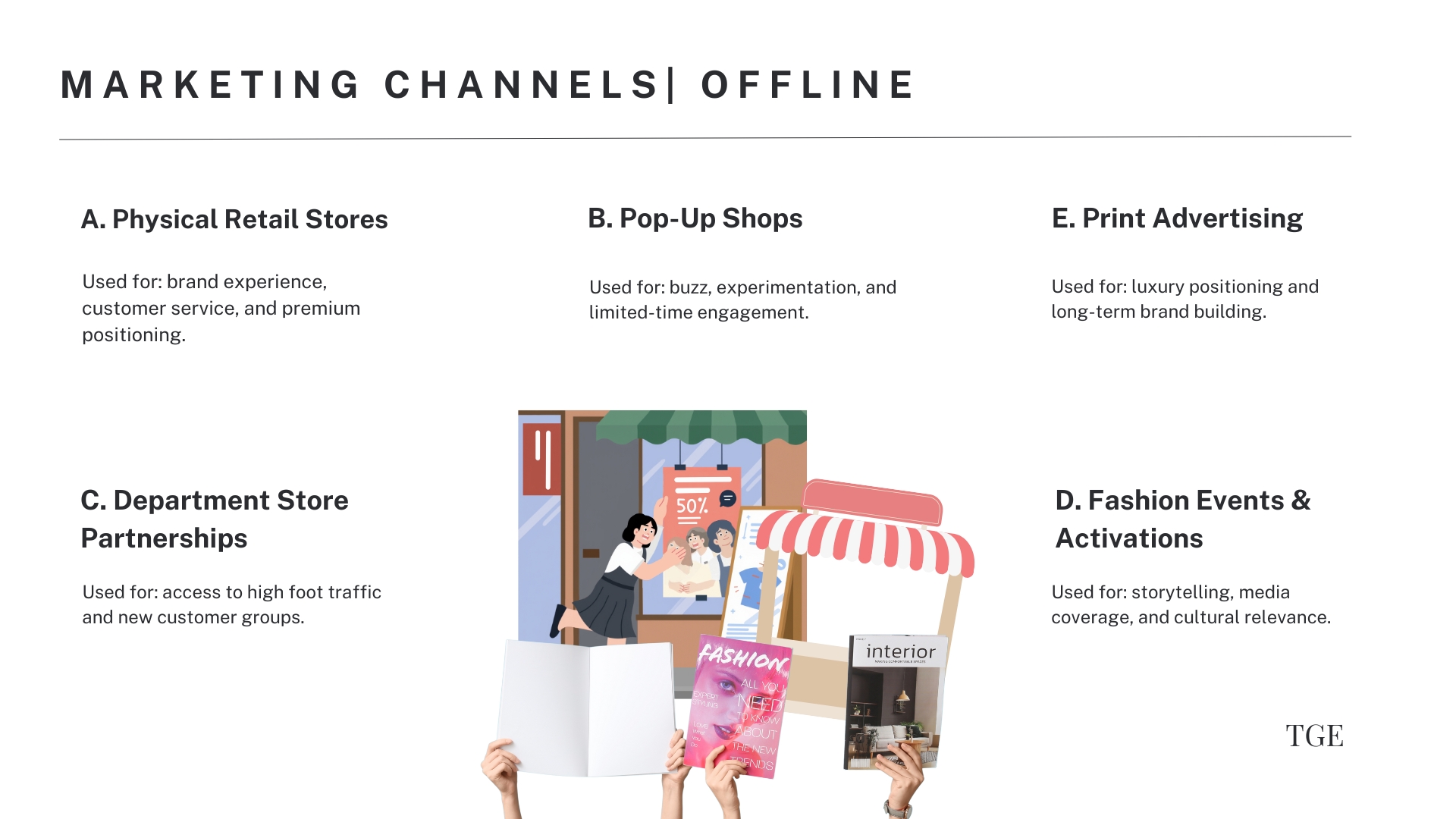
Offline Marketing Channels in Fashion
Fashion is a sensory industry – customers still want to touch, feel, and experience products in real life.
Core Offline Channels + Examples
A. Physical Retail Stores
Used for: brand experience, customer service, and premium positioning.
Example: Gucci’s flagship stores use interior design, music, and scent to create a luxury atmosphere that reinforces brand identity.
B. Pop-Up Shops
Used for: buzz, experimentation, and limited-time engagement.
Example: Jacquemus opened a pink “BAMBINO” pop-up vending machine in Paris – it went viral and sold out instantly.
C. Department Store Partnerships
Used for: access to high foot traffic and new customer groups.
Example: A new designer brand partners with Rinascente in Milan to gain visibility without opening its own store.
D. Fashion Events & Activations
Used for: storytelling, media coverage, and cultural relevance.
Example: Dior hosts immersive exhibitions that attract press, influencers, and fans – strengthening brand prestige.
E. Print Advertising
Used for: luxury positioning and long-term brand building.
Example: Chanel places full-page ads in Vogue to reinforce its heritage and timeless identity.
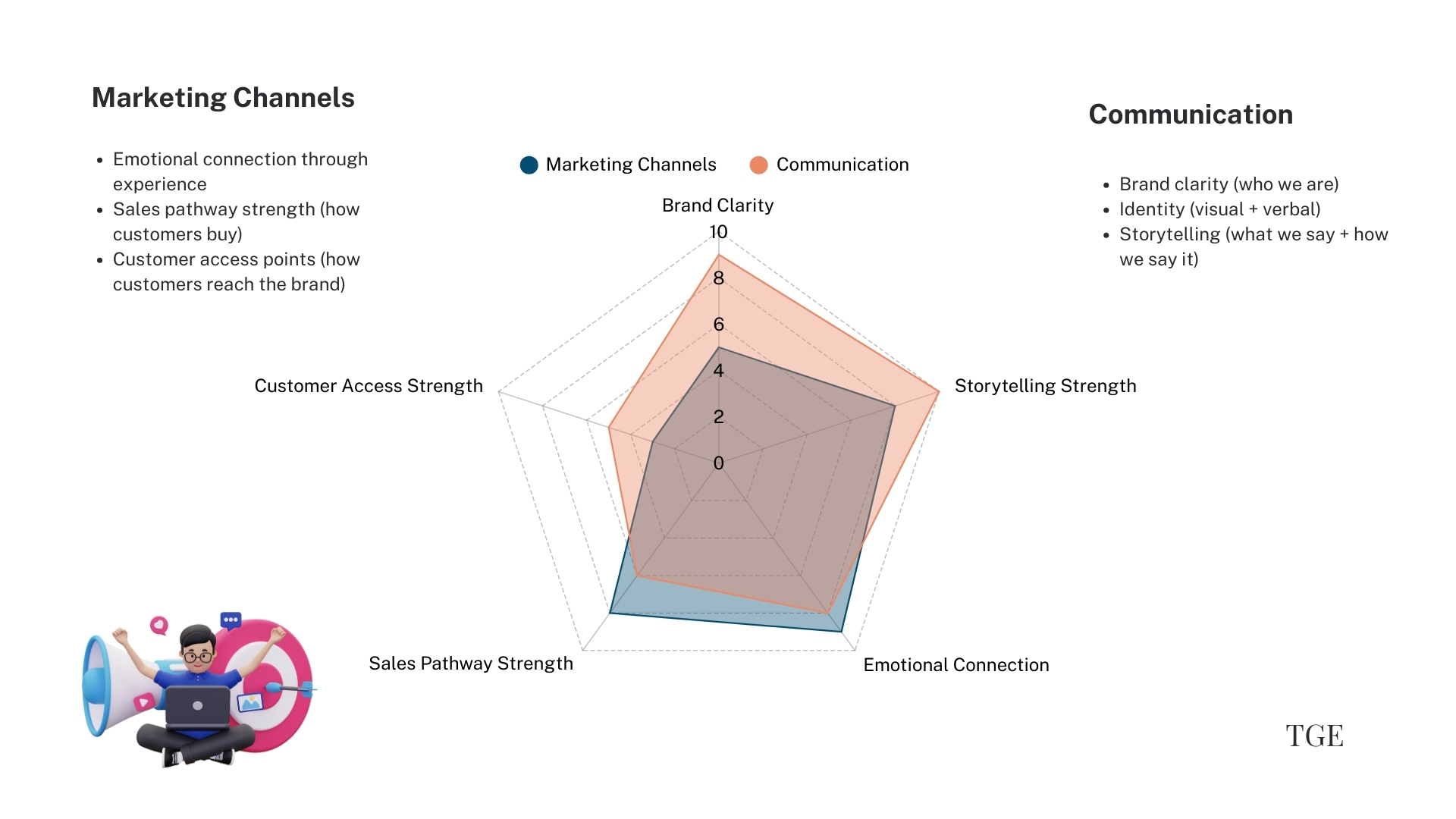
Clear Explanation of the 5 Dimensions (1–9)
1. Brand Clarity
Meaning: How clearly the brand expresses who it is.
What it focuses on:
-
Identity
-
Values
-
Aesthetic direction
-
What makes the brand unique
Examples:
-
A sustainable brand clearly communicates its eco values
-
A premium brand shows quality through visuals and tone
-
A heritage brand highlights its history and craftsmanship
2. Storytelling Strength
Meaning: How well the brand tells a coherent, emotional story.
What it focuses on:
-
The story behind the collection
-
The inspiration (culture, art, nature, heritage)
-
The brand’s mission (sustainability, inclusivity, craftsmanship)
-
The lifestyle the brand represents
Examples:
-
A collection inspired by Myanmar textiles
-
A premium brand telling a story of craftsmanship
-
A sustainable brand explaining its materials and process
3. Emotional Connection
Meaning: How strongly the brand makes people feel something.
What it focuses on:
-
Desire
-
Aspiration
-
Belonging
-
Lifestyle identity
Examples:
-
A luxury brand creating desire through exclusivity
-
A streetwear brand building community and culture
-
A sustainable brand connecting through purpose and values
4. Sales Pathway Strength
Meaning: How easy it is for customers to move from interest → purchase.
What it focuses on:
-
Clear product information
-
Easy website navigation
-
Smooth checkout
-
Clear “shop now” direction
-
Good pricing communication
Examples:
-
A premium brand with a clean, simple e‑commerce flow
-
A sustainable brand explaining materials clearly to support purchase
-
A heritage brand offering detailed craftsmanship descriptions
5. Customer Access Strength
Meaning: How easy it is for customers to find and reach the brand.
What it focuses on:
-
Visibility
-
Availability
-
Presence across channels
-
How many touchpoints the customer has
Examples:
-
A brand with stores, pop-ups, and strong online presence = high access
-
A brand with only Instagram and no website = low access
-
A sustainable brand with limited distribution = medium access
Mini Assignment: Marketing Channels Reflection
Teacher Note:
Based on your previous lessons, you should now understand the difference between fashion communication (what the brand says) and marketing channels (where and how the brand reaches customers). Use that knowledge to answer the questions below. Focus on how the brand operates across online and offline channels, and how customers move through the journey.
Choose one fashion brand and answer the two reflection questions below. Keep your answers short (3–5 sentences each).
Questions
-
Which marketing channel is most effective for this brand, and why?
-
What is one improvement the brand could make to strengthen its customer journey?