Lesson Notes
Understanding how messages move through a complex network.
The fashion industry is a dialogue, not a monologue. To understand how a brand’s message reaches a consumer, we must look at the “Ecosystem”-the interconnected players and platforms that amplify or change that message.
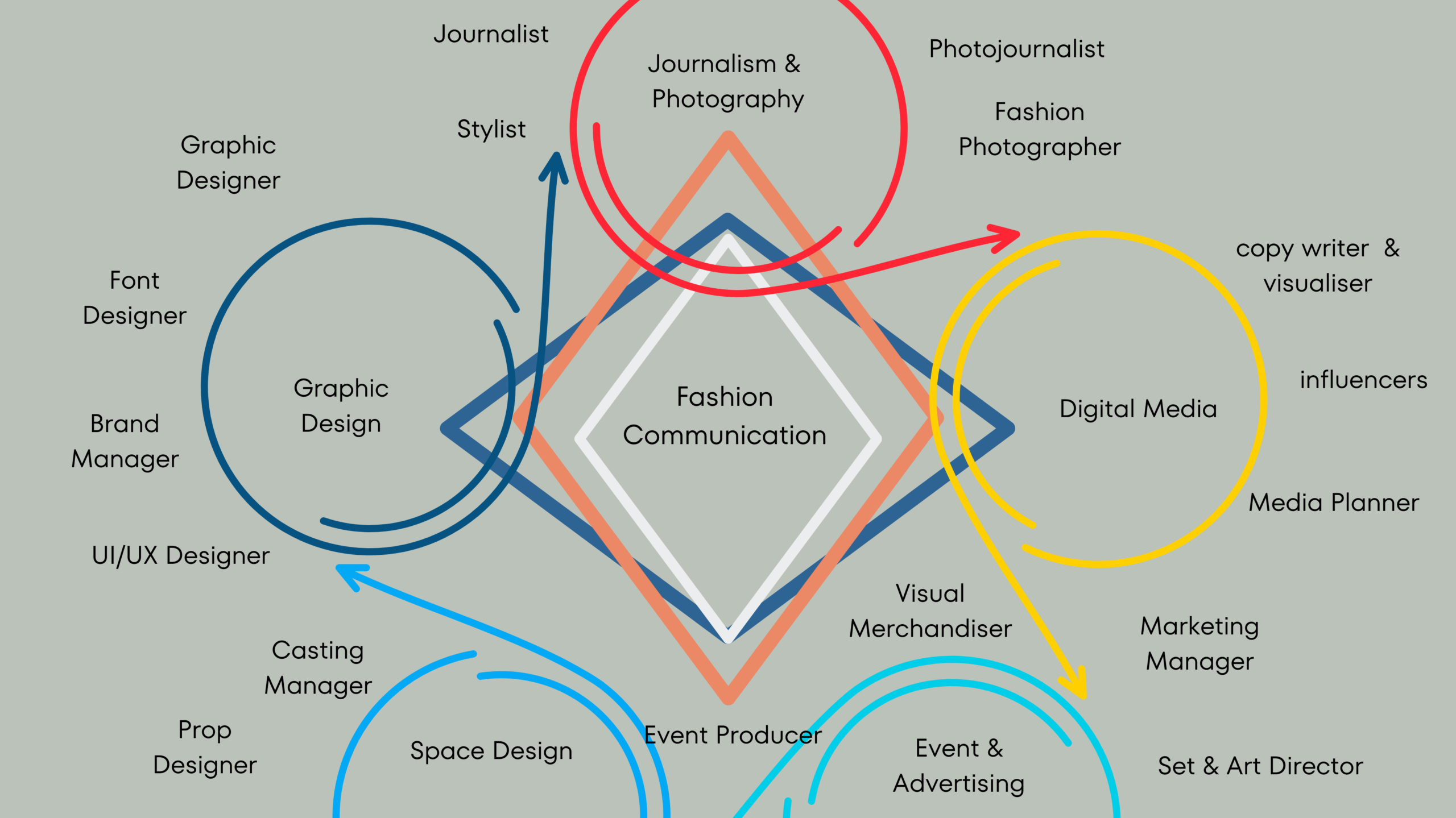
1. The Key Players
-
-
The Brand: The source of the message (Creative Directors, Marketing teams).
-
PR (Public Relations): The bridge. They manage the brand’s reputation and pitch stories to the media.
-
Media: Magazines (Vogue, i-D), blogs, and news outlets that provide “validation” to the brand.
-
Stylists & Creatives: They translate the clothes into a visual “look” that fits a specific platform.
-
Influencers/Ambassadors: Individuals who provide a “peer-to-peer” connection to the audience.
-
2. The PESO Model (Media Types)
Fashion communication is categorized into three main “buckets”:
-
PESO = four media types
P — Paid Media
Media you pay for to amplify reach.
Examples: digital ads, sponsored posts, influencer collaborations, advertorials.E — Earned Media
Third-party coverage you don’t pay for directly.
Examples: PR coverage, press mentions, reviews, features, word-of-mouth.S — Shared Media
Content shared and amplified through social platforms.
Examples: brand social media, reposts, community engagement, UGC.O — Owned Media
Channels you fully control.
Examples: brand website, blog, newsletter, brand magazine.
3. Online vs. Offline Touchpoints
A “touchpoint” is any moment a consumer interacts with the brand.
-
Offline: The physical store window, the feel of the packaging, a fashion show, or a pop-up event.
-
Online: A TikTok video, an email blast, or a seamless checkout experience on a mobile app.
Key Takeaway: Successful brands ensure the message is consistent across every single one of these touchpoints.
Understanding the Fashion Communication Ecosystem
Fashion communication operates within an ecosystem, meaning all messages circulate through a connected network rather than moving in a straight line. A brand may initiate a message, but its meaning is shaped, amplified, or transformed as it moves across different players, platforms, and touchpoints. Understanding this ecosystem helps students see how perception is built over time through interaction.
In today’s fashion industry, communication is a dialogue. Brands speak, but media, creatives, influencers, and consumers respond – creating a continuous exchange that influences brand image and value.
Case Study: Luxury Communication Ecosystems – LVMH & Kering
Luxury fashion houses like LVMH and Kering demonstrate how a communication ecosystem works in practice. Rather than relying on a single message or channel, both groups orchestrate complex, multi-layered communication strategies that involve all key players in the ecosystem – from brand teams and PR to media, influencers, and consumers.
LVMH: Crafting Narrative Through Experience and Digital Presence
LVMH uses its ecosystem to build and amplify brand meaning across platforms and audiences.
-
Omnichannel Integration & Digital Visibility: The group has invested in digital platforms and partnerships (e.g., expanded collaborations in China and e-commerce initiatives) to be present where luxury consumers spend time online, while still maintaining exclusivity and prestige.
-
Events & Sponsorships as Platforms: Sponsorships like major sports (e.g., involvement with the Olympic Games) and high-profile cultural partnerships function as communication touchpoints that reinforce heritage and lifestyle positioning.
-
Sustainability & CSR Messaging: LVMH integrates sustainability into its external communications, linking environmental responsibility with craftsmanship and long-term value — this helps strengthen credibility across media, influencers, and consumer dialogues.
By aligning owned, paid, and earned media, and ensuring consistent narratives across online and offline touchpoints, LVMH leverages the fashion communication ecosystem to maintain desirability while scaling global reach.
Kering: Values-Led Communication and Community Engagement
Kering’s approach shows how luxury brands can use ecosystem dynamics to embed deeper values into communication:
-
Sustainability as Core Narrative: Kering has positioned sustainability and corporate responsibility at the center of its brand communication. This is reflected in SEO strategies that emphasize green and ethical messaging, which in turn boosts visibility and perception in digital ecosystems.
-
Strategic Partnerships for Amplification: Initiatives like long-term partnerships with cultural institutions (e.g., Cannes Film Festival and Women in Motion) create platforms where the group’s luxury houses (Gucci, Saint Laurent, Balenciaga) gain earned media and influencer visibility while reinforcing shared values.
-
Community & Influence Activation: By engaging with cultural and creative communities beyond fashion — film, arts, and sustainability movements — Kering brands expand their ecosystem with meaningful content that resonates with younger, value-driven consumers.
Kering’s strategy illustrates that in an ecosystem model, brand narratives must be co-created with cultural partners, media, and communities, not just broadcasted from the top down.
Individual Mini Case Study
Fashion Communication Ecosystem
Brand Choice
Choose one luxury brand from
LVMH or Kering
Task (Simple)
Look at one recent Instagram post or campaign from your chosen brand.
Answer These 4 Questions
-
Brand Message
What is the main message or image the brand is communicating? -
Media Type
Is this Owned, Paid, or Earned media? -
Key Player
Who helps communicate this message?
(creative team, influencer, media, or consumer) -
Touchpoint
Is this an online or offline touchpoint?
How does it represent the brand?
Reflection (Very Short)
In 3–4 sentences, explain how this message is part of a fashion communication ecosystem.
Submission
-
Individual work
-
150–200 words
-
Screenshot or link optional
Learning Goal (Student-Friendly)
Understand that fashion communication is not one message, but a system involving brands, media, creatives, and audiences.